Ice Dam and Roof Leak Water Damage in Anoka, MN
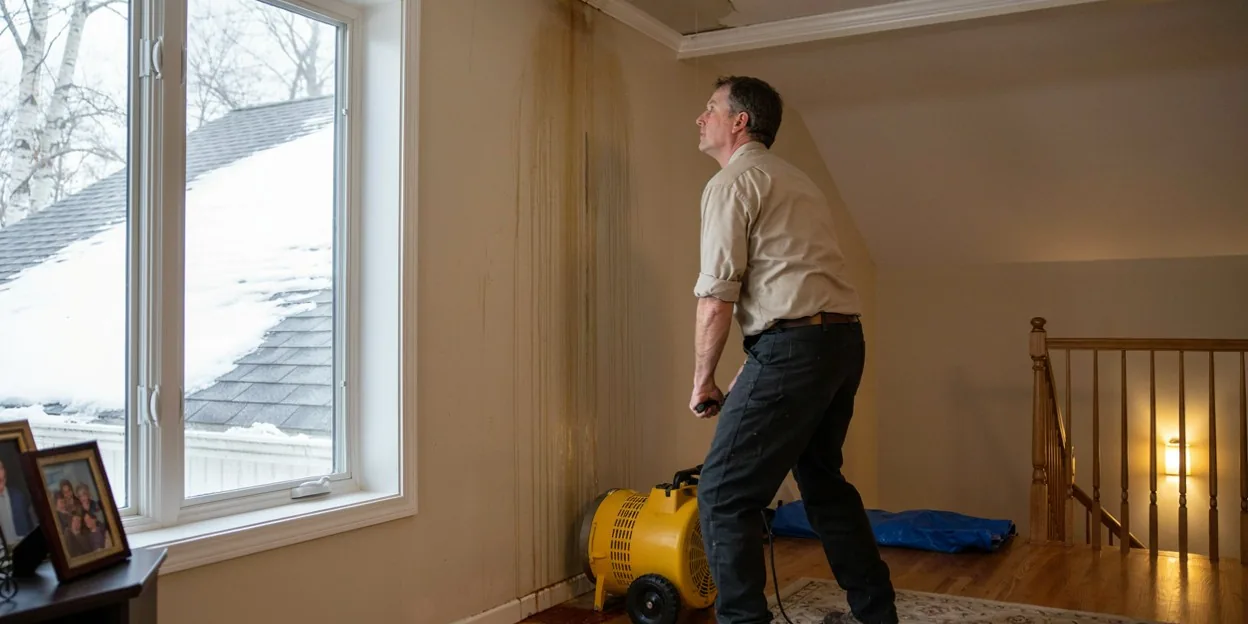
The icicles along the north eave of your rambler were three feet long by the middle of February, and you thought they looked nice. Then a brown ring appeared on the bedroom ceiling near the outside wall, the paint on the wall below it bubbled, and one morning the ring was dripping. This site puts you through by phone to an independent local provider who dries out ice dam and roof leak damage in Anoka and across Anoka County.
Tracing the water from the eave to the drip
An ice dam is a ridge of ice at the cold edge of the roof. Heat leaking into the attic melts the snow above the living space, the meltwater runs down to the eave where the roof is cold, and it freezes there. Behind that ridge a pool forms, and the pool backs up under the shingles and into the roof deck, the soffit, the top of the exterior wall, and the ceiling below. The crew's first job is following that path with a meter: attic insulation above the stain, the top plate of the wall, the drywall on the ceiling, and the wall down to the floor.
A storm-torn roof works the same way from a different start. Rain comes in at the missing shingles or the lifted flashing, soaks the insulation, and finds the ceiling. The crew maps how far it spread before anything is cut.
The first afternoon: catch the drip, pull the ice off from the ground
Put a bucket under the drip and poke a small hole in the center of a bulging ceiling so it drains in one place instead of spreading. Do not climb on an icy roof. A roof rake from the ground pulls the snow back from the eave and slows the melt feeding the dam; chipping at the ice itself tears shingles. Photograph the stain, the wall, and the icicles from outside. Then call. The roofer or a roof rake deals with the roof. The cleanup crew deals with everything under it.
What comes down and what dries
Wet blown-in or batt insulation above the stain comes out, because insulation that has been soaked holds the water against the ceiling drywall and never dries fully in place. The ceiling drywall gets metered and opened at the stain, and often a larger section comes down so the joists above can dry. The top of the exterior wall gets the same treatment: drywall off where it reads wet, insulation out, studs and sheathing metered. Then structural drying puts air movers in the room and, if the attic is involved, moves air through the opened bays until the readings come back.
If the wall was wet long enough for water to run down inside it to the basement, the crew meters the rim joist and the top of the block below, and the job picks up a basement flooding cleanup component at the bottom of the wall.
Why Anoka roofs grow dams: 1960s attics and 90 inches of snow
The ramblers and split-levels built across Anoka from the 1950s into the 1970s came with shallow attics, a few inches of insulation, and little or no soffit venting by today's standards. Warm air leaks into those attics through can lights, bath fans, and the attic hatch, so the roof deck over the bedrooms runs warm while the eaves stay at outside temperature. Add a low-slope roof over an attached garage and a north-facing eave that never sees sun, and the dam forms every winter with enough snow.
The winter of 2022 to 2023 was that kind of winter, with about 90 inches at the Twin Cities airport, the third most on record, and ice dam calls across the north metro through February and March. The long snow cover melts at the eave in April, too, and a house that made it through the cold can still take water when the thaw finally arrives.
Damage from an ice dam or a storm-opened roof is often treated as sudden damage under a homeowner policy, though the roof repair itself and the interior drying may be handled separately. This site cannot say what yours pays. The crew photographs the attic, the ceiling, and the wall and logs the readings so the record is complete.
Calling about a ceiling stain or an ice dam
Say where the stain is, whether it is dripping, whether there is ice on the eave above it, and how far down the wall the water has come. Call (763) 363-6050.