Water Damage Restoration in Swede Town, MN
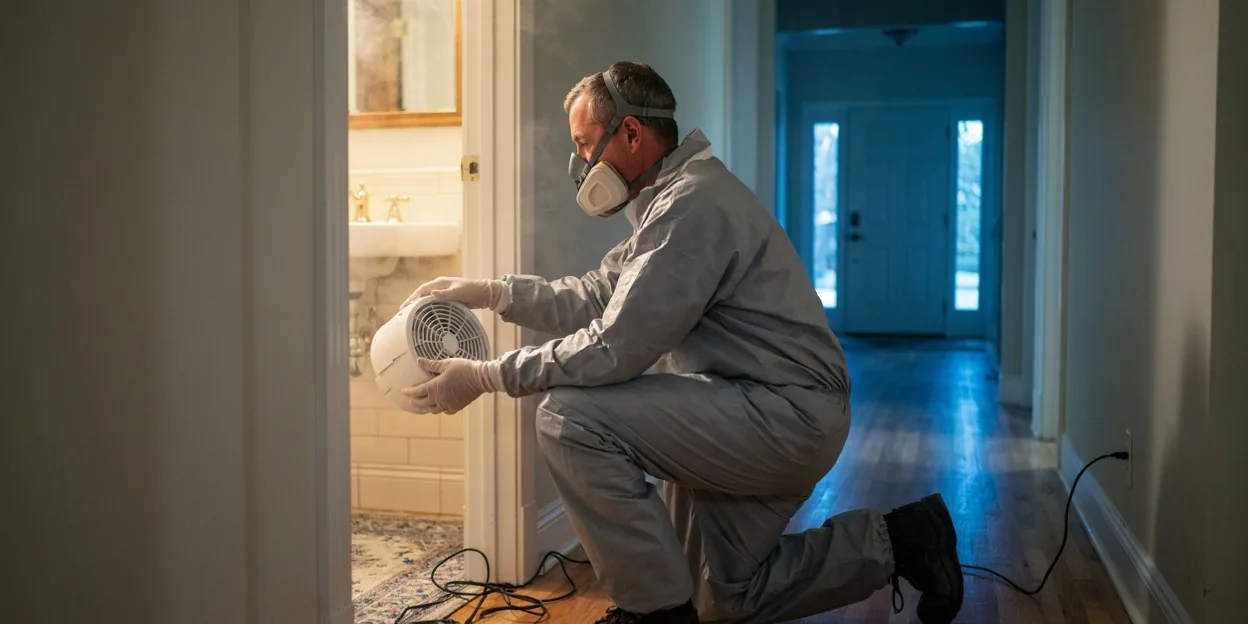
Swede Town is the neighborhood along Van Buren Avenue between Second and Fifth Streets, settled by Swedish families in the 1880s and 1890s, where Swedish was the language of the street for a generation. The houses are workingmen's frame houses and small Craftsman bungalows from the 1880s through the 1920s, a few of them older, on stone and early block foundations with low basements that were never meant to be living space. Many have since gained a finished room, a washer and dryer, and a water heater down there.
Those basements sit a few blocks from the Rum River. When the river is up and the ground is saturated, water comes through the stone and the floor stays damp for weeks. Old galvanized and cast iron plumbing adds its own leaks.
This site puts Swede Town homeowners through by phone to an independent local water damage provider. The provider meters the walls before anything is cut.
Swede Town water damage below a 1900 frame house
A low stone basement with an inch of water after the frost goes out is a basement flooding cleanup, scoped around what is stored down there and how long the water sat. A tank that rusted through next to the old chimney base is a water heater leak cleanup. Standing water on the floor begins with water extraction and the first readings.
Where the neighborhood goes while the basement dries
A few blocks north on Sixth Avenue, the Rum River Library has been the county's main branch in its current building since 2000, with meeting rooms and quiet space for a family whose lower level is full of fans for a week.
Call (763) 363-6050 and describe what you see downstairs. We put you through to an independent local water damage provider serving Swede Town.
Services Available in Swede Town
Basement Flooding Cleanup
Water pumped out of a full basement under a 1960s rambler or split-level, then the block walls, carpet pad, and paneling metered for what stayed wet.
Sump Pump Failure Cleanup
Cleanup after the pump quit in a spring thaw or a summer storm, and drying of the floor and the bottom of the walls the pit overflow reached.
Water Extraction
Standing water pulled off concrete, carpet, and tile on any level of the house, with moisture readings taken as soon as the floor is clear.
Frozen Pipe Cleanup
Cleanup after a supply line froze in a rim joist, a garage wall, or a cold corner of the basement in January and split when the thaw came.
Structural Drying
Air movers and dehumidifiers run against daily readings until the block, framing, and drywall in a cold Minnesota basement reach their dry target.
Ice Dam and Roof Leak Water Damage
Wet attic insulation, ceilings, and exterior walls dried after an ice dam backed meltwater under the shingles or a storm tore the roof open.
Water Heater Leak Cleanup
The tank in the utility corner let go and the basement floor, the nearest finished wall, and the boxes along it are wet and need to be pumped and dried.
Sewer Backup Cleanup
Contaminated water that came up the floor drain during a river crest or a heavy rain removed, with the carpet and drywall it touched cut out and the floor cleaned.